Opening Thought
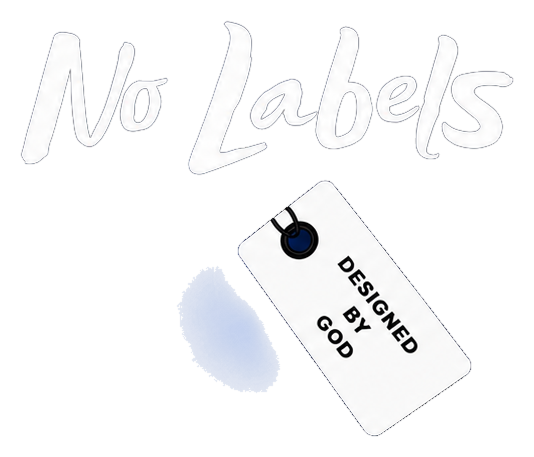
Most of us carry names that were never printed on a birth certificate. Successful. Failure. Smart. Difficult. Strong. Weak. Too much. Not enough. Divorced. Addict. Leader. Outsider. Poor. Wealthy. Popular. Invisible. Sick. Healthy. Religious. Broken.
Some labels describe something real about our experiences. The problem comes when one description becomes the whole definition of who we are.
Our culture often tells us to create our own identity from the inside. Other people try to define us from the outside. Scripture begins somewhere deeper: before we accomplished anything, before anyone approved or rejected us, human beings were created by God and given dignity as His image-bearers.
The gospel then tells an even more specific story. Sin is real, but it is not the final word. In Christ, grace creates a new relationship with God and a new way to understand ourselves.
Opening Question
What label, role, achievement, failure, or opinion has had the strongest influence on the way you see yourself?
Part One
Your Dignity Begins Before Your Performance
Read Genesis 1:26–27
Human worth begins with creation, not achievement. Men and women are made in the image of God.
That means dignity is not reserved for the productive, attractive, powerful, educated, healthy, wealthy, young, or socially accepted. A person's value is not measured by usefulness, income, intelligence, physical ability, popularity, or how much another person approves of them.
The image of God does not mean every choice we make is good. Scripture can affirm human dignity while also naming sin honestly. But sin does not give us permission to treat another human being as less than human.
Discussion Questions
- What does being made in God's image tell us about human worth?
- What measurements of value does our culture commonly use?
- How might believing in the image of God change the way we treat people we disagree with?
- Why is dignity different from approval of every behavior?
Key Point: You had God-given dignity before you had a résumé, reputation, platform, title, relationship status, or record of success.
Part Two
Ephesians Begins with an Uncomfortable Truth
Read Ephesians 2:1–3
Seeing ourselves through God's eyes does not mean telling ourselves only positive things. Paul begins by describing humanity as spiritually dead in sin and caught in patterns of disobedience.
Christian identity is not built on self-flattery. The gospel tells the truth about both our dignity and our need.
This protects us from two opposite errors. Shame says, “My sin means I am beyond grace.” Pride says, “I do not really need grace.” Ephesians leaves room for neither. We needed rescue, and God acted.
Discussion Questions
- Why is honest acknowledgment of sin necessary for a healthy Christian identity?
- How is conviction different from shame?
- What happens when identity language ignores repentance?
- What happens when teaching about sin forgets grace?
Key Point: God's view of us is truthful enough to name our sin and loving enough not to leave us there.
Part Three
“But God” Changes the Story
Read Ephesians 2:4–9
Two of the most important words in the passage are “But God.” The movement from death to life begins with God's mercy and love, not human achievement.
Paul emphasizes that salvation is by grace through faith and not a result of works. That means our relationship with God cannot become another performance system where we constantly ask whether we have done enough to deserve belonging.
Grace humbles us because we cannot boast. Grace also frees us because we do not have to earn what God gives as a gift.
Discussion Questions
- Why do people sometimes find it difficult to receive something they cannot earn?
- How can performance-based religion distort the way we see God and ourselves?
- What is the difference between obeying God to earn love and obeying because we have received love?
- Where are you tempted to measure your spiritual worth by performance?
Part Four
You Are God's Workmanship
Read Ephesians 2:10
Grace does not lead to purposelessness. Paul moves directly from “not by works” to “created in Christ Jesus for good works.”
Good works do not purchase salvation. They are the fruit of a life made new by grace.
The word translated workmanship carries the idea of something made or fashioned. Our purpose is not self-created from nothing. God is at work forming a people whose lives display His character in the world.
This also means purpose is larger than a job title. Careers change. Roles change. Health changes. Children grow. Ministries shift. Retirement comes. But we can still love, serve, pray, encourage, create, teach, forgive, give, mentor, work honestly, show mercy, and bear witness to Christ.
Discussion Questions
- How does verse 10 keep grace from becoming passive?
- Why do people often confuse purpose with occupation?
- What good work may already be in front of you?
- How can purpose remain even when a role or ability changes?
Key Point: You are not saved by good works, but you are saved into a life where grace becomes visible through faithful living.
Part Five
In Christ, Condemnation Is Not Your Name
Read Romans 8:1, 14–17
Romans 8 begins with “no condemnation” for those who are in Christ Jesus. Paul then describes believers as led by the Spirit and adopted into God's family.
Some people believe God has forgiven them in theory while continuing to live as though their worst failure is their permanent identity.
Consequences can remain. Memories can remain. Relationships may need repair. Growth may take time. But condemnation is different from conviction. Conviction points us toward repentance and life. Condemnation tells us there is no future beyond failure.
In Christ, believers receive a new family relationship with God: adoption.
Discussion Questions
- What is the difference between guilt over something you did and believing that failure is all you are?
- How does adoption change the way we think about belonging?
- Why can people continue punishing themselves after receiving forgiveness?
- What would it mean to live from “no condemnation” without minimizing sin?
Part Six
New Creation Does Not Mean Instant Perfection
Read 2 Corinthians 5:14–17
Paul says that anyone in Christ is a new creation. This is a profound statement about belonging to the new work God is doing through Christ.
But “new creation” should not be used to pretend believers instantly lose every struggle, wound, habit, consequence, or weakness. The New Testament still calls Christians to grow, repent, forgive, put off old patterns, and become mature.
New identity gives us a new direction and a new source of life. Transformation then unfolds as we learn to live consistently with what God has made true in Christ.
Discussion Questions
- What unhealthy expectations can come from treating “new creation” as instant perfection?
- How can growth be slow without making our new identity unreal?
- What old pattern no longer fits the life Christ is forming in you?
- Why is community important in learning to live a new identity?
Part Seven
You Belong to a People, Not Just a Personal Brand
Read 1 Peter 2:9–10
Modern identity is often intensely individual: “Who am I?” Scripture repeatedly answers that question communally too: “Who are we?”
Peter calls believers a chosen people, a royal priesthood, a holy nation, and God's special possession so that they may declare His praises.
Christian identity is not primarily about becoming the most impressive version of ourselves. We are brought into a people who belong to God and participate in His mission.
This challenges both isolation and superiority. Being chosen is not a license to look down on others. It is a calling to display the mercy of the God who called us out of darkness.
Discussion Questions
- Why is Christian identity bigger than personal self-esteem?
- How does belonging to God's people challenge isolation?
- How can “chosen” language be misused if separated from mission and mercy?
- What does your life communicate about the God you belong to?
Important Clarification
Identity in Christ Is Not a Tool for Denying Real Life
Saying “my identity is in Christ” does not mean other parts of our lives become imaginary or irrelevant. Scripture recognizes family relationships, ethnicity, nationality, sex, age, vocation, health, grief, social circumstances, gifts, and responsibilities.
The issue is not whether these things describe something true about us. The issue is whether any created thing is asked to carry the full weight of defining our worth, belonging, and ultimate hope.
Some labels also describe painful realities that may require healing, support, repentance, medical care, counseling, recovery, or long-term growth. Christian identity should help us face reality with hope, not pressure us to deny it.
Jesus Connection
Jesus Gives Us an Identity We Could Not Manufacture
Christian identity is ultimately relational. We belong to God because of Jesus Christ.
Jesus entered our human condition, lived faithfully, bore sin at the cross, rose from the dead, and brings those who trust Him into a new relationship with the Father.
We are not asked to save ourselves through better self-talk. The gospel is not “believe in yourself more.” It is the announcement that God's grace has acted in Christ.
Because Christ is enough, we no longer need achievement to become a savior, failure to become a permanent judge, approval to become a god, or labels to become a prison.
Our identity becomes anchored outside our changing circumstances: in the One who loved us and gave Himself for us.
Bringing It Together
Creation says: You bear God's image and possess God-given dignity.
Sin says: You need rescue and cannot save yourself.
Grace says: God moved toward you in mercy.
Union with Christ says: Your deepest belonging is now found in Him.
Adoption says: You are brought into God's family.
Purpose says: Grace forms you for a life of faithful good works.
Community says: You are part of a people called to display God's mercy.
Personal Application
- A label that has become too powerful in my life is ______________________________.
- A failure I have allowed to define me is ______________________________.
- An achievement or role I depend on for worth is ______________________________.
- A truth from Scripture I need to receive more deeply is ______________________________.
- A good work God may already have placed before me is ______________________________.
- A person or community that can help me live from my identity in Christ is ______________________________.
Weekly Challenge: Name It, Test It, Replace It, Live It
Name It
Write down one label you frequently use for yourself, especially when you fail, compare yourself to others, or feel rejected.
Test It
Ask whether the label is the whole truth. Does Scripture use it as your ultimate identity? Is it a circumstance, role, wound, temptation, achievement, or failure that has become larger than it should be?
Replace It
Choose one Scripture-grounded truth from this study: image-bearer, saved by grace, God's workmanship, no condemnation in Christ, adopted, new creation, or part of God's people.
Live It
Take one practical action that fits that truth. Receive forgiveness, apologize, serve someone, stop performing for approval, ask for help, use a gift, establish a boundary, or step into a good work God has placed before you.
Final Reflection
You are more than the best thing you have done and more than the worst thing you have done.
You are more than what someone called you, what happened to you, what you own, what you earn, how you look, how healthy you feel, how useful you seem, or how successful you appear.
Christian identity does not require pretending those realities do not affect us. It puts them in their proper place beneath a deeper truth.
For those who are in Christ, grace has the final word about belonging, and faithful purpose becomes the response.
Closing Prayer
Father, thank You for creating us in Your image and for meeting us in our sin with mercy through Jesus Christ.
Expose the labels we have allowed to become louder than Your truth. Free us from building our worth on performance, approval, appearance, achievement, comparison, failure, or the expectations of other people.
Help us receive grace without pride and correction without condemnation. Teach us to live as people who belong to Christ, who have been brought into Your family, and who are being formed for good works.
Give us patience with the process of transformation. Where we need repentance, give us courage. Where we need healing, give us help. Where we need community, teach us to receive it. Where we need purpose, open our eyes to the faithful work already in front of us.
Make our identity in Christ visible not through self-importance but through humility, mercy, love, holiness, service, and hope. In Jesus' name, amen.