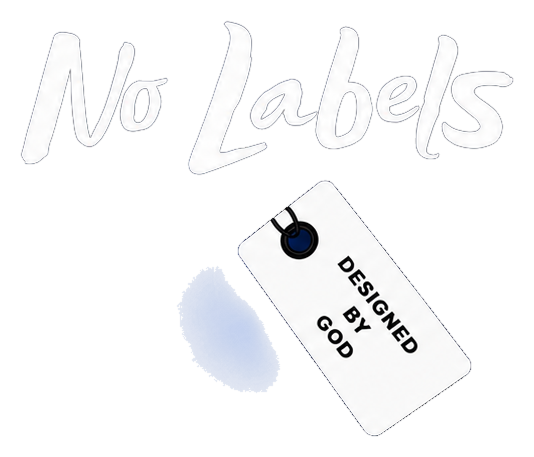
How to Use This Study
Keep Scripture first and story second. A suggested rhythm is opening prayer or worship, Scripture and teaching, family discussion, a practical activity, application, a weekly challenge, and prayer.
This study does not ask anyone to deny real circumstances, wounds, diagnoses, failures, achievements, roles, or responsibilities. The goal is to place every description underneath the authority of what God has revealed about humanity and about those who belong to Christ.
The Labels We Wear
Big Idea: The world assigns labels. God knows us by name and calls us to belong to Him.
Scripture: Genesis 1:26–27; Isaiah 43:1–7; 2 Corinthians 5:17; Galatians 3:26–29
Big Question: Who gets to tell me who I am?
Leader Note
Some labels are simply descriptions: parent, student, athlete, mechanic, teacher, introvert, extrovert. They are not necessarily bad. Other labels become damaging when we allow them to become definitions: failure, problem child, divorced, addict, poor, weird, too old, not smart enough, unwanted.
The goal is not to pretend those experiences do not exist. It is to refuse to give them authority to define the whole person.
Handle Isaiah 43 carefully. God is speaking specifically to Israel in its original context. We should not turn every statement into an individualized promise without first recognizing that context. The passage does reveal God’s covenant character: He knows His people, claims them, redeems them, and does not reduce them to their circumstances.
Opening Question
What label did people place on you growing up?
How did that label affect the way you saw yourself? Parents and adults should answer too. Children need to discover that adults have carried labels as well.
Part One
Before Anyone Labeled You, God Created You
Read Genesis 1:26–27.
The first thing Scripture tells us about human identity is not what humans accomplish. It is whose image humanity bears.
Before occupation. Before popularity. Before grades. Before accomplishments. Before failures. Before social media. Human beings were created in the image of God.
Our value therefore does not begin with what other people think about us.
Discuss
- What gives something value?
- How does being made in God’s image affect the way we should see ourselves?
- How should it affect the way we treat someone we do not like?
Part Two
Labels Can Describe Without Defining
There is a difference between saying, “I failed,” and “I am a failure.” There is a difference between “I struggle with this” and “This struggle is who I am.” There is a difference between “Something painful happened to me” and “What happened to me determines my worth.”
Scripture does not require us to deny reality. Christian identity is not pretending problems are not real. Instead, we learn to place every description of ourselves underneath what God has revealed.
Family Discussion
- What labels do people your age commonly receive?
- Where do those labels come from: school, work, family, church, social media, past mistakes, appearance, money, race or culture, achievement?
- What happens when a description becomes a definition?
Part Three
Called by Name
Read Isaiah 43:1–7. First recognize the context: God is addressing Israel. Israel had experienced judgment, displacement, fear, and uncertainty. Yet God reminds His covenant people that their circumstances have not erased His claim upon them.
Notice the movement: Created. Formed. Redeemed. Called. Belonging.
The circumstances were real, but the circumstances did not get the final word.
Part Four
Identity in Christ
Read 2 Corinthians 5:17 and Galatians 3:26–29.
The gospel does not simply give us better labels. Jesus gives us new life. Christian identity therefore is not self-invention: “I decide who I am.” But neither is it: “Other people decide who I am.” Our identity is increasingly understood through our relationship with Christ.
Jesus Connection
Jesus repeatedly encountered people whom society had reduced to categories: tax collector, sinner, Samaritan, unclean, blind, lame, possessed, outcast.
He did not pretend their situations were not real. But He refused to treat their condition, reputation, or past as the sum total of who they were. Jesus saw people, and He called people to follow Him.
Family Practice: Label Drop
Give everyone several sticky notes. Write labels you have carried. Do not force anyone to reveal something private. Place the notes somewhere visible, then remove them.
Instead of simply replacing them with inspirational words, open Scripture. Write biblical truths such as:
- Created in God’s image — Genesis 1:27
- New creation in Christ — 2 Corinthians 5:17
- God’s workmanship — Ephesians 2:10
- Part of God’s people — 1 Peter 2:9–10
The point is not, “These are my new positive labels.” The point is: “I will allow God’s truth to have greater authority than the labels placed on me.”
Song connection: “Who You Say I Am” — Hillsong Worship. Ask which identity statements can be connected directly to Scripture.
Weekly Challenge
Every time you catch yourself saying, “I am _____,” stop and ask: Is this something God says about me, a description of my circumstances, or a label I have allowed to define me?
Prayer
Father, help us recognize the labels we have carried that You never intended to define us. Teach us to see ourselves and one another through the truth of Your Word. Thank You for creating us in Your image and for giving new life through Jesus. Amen.
Designed by God, Not Defined by People
Big Idea: You are intentionally created and, in Christ, called into God’s purposes.
Scripture: Psalm 139:13–18; Ephesians 2:8–10; 1 Peter 2:9–12; Romans 12:3–8
Big Question: If God designed me, what does that mean for the way I see myself and my purpose?
Opening Question
When have you felt like you had to earn your worth?
Part One
Known by the Creator
Read Psalm 139:13–18.
Psalm 139 is not primarily a motivational speech about how amazing we are. It is worship directed toward an amazing God. David is overwhelmed by how completely God knows him.
God knows. God sees. God creates. God is present.
Our confidence begins with the Creator, not ourselves.
Discuss
What is the difference between saying, “I’m valuable because I’m impressive” and “My life has value because I belong to my Creator”?
Part Two
God’s Workmanship
Read Ephesians 2:8–10.
Verse 10 should never be separated from verses 8–9. We are not God’s workmanship because we performed well enough. We are saved by grace. Then Paul says we are God’s workmanship, created in Christ Jesus for good works.
Not: Performance → Worth → Acceptance.
Family question: Where are you trying to prove something God has already settled by grace?
Part Three
Designed Differently on Purpose
Read Romans 12:3–8.
God did not make every member of the body identical. Different gifts do not indicate different levels of worth.
This matters in families. One child may be outgoing, another quiet. One loves sports, another books. One learns quickly in a classroom, another learns by doing. One parent may be organized, another spontaneous.
Difference does not automatically mean deficiency.
Family Discussion
- Where are we tempted to compare ourselves with each other?
- Have we ever accidentally communicated that one personality, talent, or achievement is more valuable than another?
Part Four
Designed to Belong
Read 1 Peter 2:9–12.
Peter’s language is corporate: a chosen people, a royal priesthood, a holy nation, God’s special possession.
Christian identity is not merely, “Who am I?” It also asks, “Whose people are we?” God does not save us merely into individual spiritual lives. He forms a people who display His character.
Jesus Connection
Jesus did not assemble twelve identical disciples. Peter was not John. Matthew was not Peter. Thomas was not Andrew. Their backgrounds, personalities, and weaknesses differed, but Jesus formed them together.
Discipleship does not erase individuality. Jesus redirects it toward God’s purposes.
Family Practice: Design Cards
Each family member gets a card. Other family members write one observed God-honoring quality or gift on it: compassion, patience, courage, generosity, creativity, listening, encouragement, leadership, service.
Then attach a Scripture that speaks to how such qualities should be used. The goal is not flattery. It is helping one another recognize gifts that can be surrendered to God.
Song connection: “Jireh” — Elevation Worship & Maverick City Music. Compare its themes with Matthew 6:25–34 and Ephesians 2:8–10.
Weekly Challenge
Ask each morning: God, how can what You have given me serve someone else today?
Prayer
Creator God, thank You for knowing us completely. Free us from comparison and the pressure to prove our worth. Show us how the gifts You have given us can serve others and glorify You. Amen.
Identity Through Every Season
Big Idea: Seasons change. Our belonging to Christ remains.
Scripture: Ecclesiastes 3:1–11; 2 Corinthians 5:17; Colossians 3:1–4; Romans 8:31–39
Big Question: Who am I when the season that once defined my life changes?
Opening Question
What season is your family experiencing right now?
Building, waiting, celebrating, grieving, starting, ending, healing, transitioning?
Part One
Life Has Seasons
Read Ecclesiastes 3:1–11.
Ecclesiastes does not promise every season will feel good. It acknowledges that life contains radically different experiences: birth and death, weeping and laughing, mourning and dancing, keeping and letting go.
We often become attached to seasons. Then something changes. The children leave home. A career ends. Health changes. A relationship ends. School changes. Success disappears. Grief arrives. Suddenly we ask, “Who am I now?”
Part Two
Your Season Is Not Your Identity
A person can be grieving without becoming Grief. A person can be unemployed without becoming Worthless. A teenager can be rejected without becoming Unlovable. A parent can make a mistake without becoming Failure.
Circumstances matter. Pain matters. Consequences matter. But they are not qualified to become our ultimate identity.
Discuss: What season have you had the hardest time releasing? Why?
Part Three
Hidden with Christ
Read Colossians 3:1–4.
Paul anchors Christian identity somewhere circumstances cannot reach: your life is hidden with Christ in God.
Jobs change. Relationships change. Bodies age. Popularity disappears. Children grow. Money comes and goes. But our belonging to Christ is not dependent upon those things.
Jesus Connection
Jesus’ earthly ministry moved through very different circumstances: celebration, opposition, crowds, loneliness, praise, rejection, suffering, death, resurrection.
The circumstances changed dramatically. His identity and mission did not.
During temptation, the challenge repeatedly attacked identity: “If you are the Son of God…” Jesus refused to let circumstances redefine what the Father had declared.
Part Four
Nothing Can Separate Us
Read Romans 8:31–39.
Paul does not promise Christians an easy life. He names suffering, trouble, hardship, persecution, famine, and danger. Yet none of them can separate God’s people from His love in Christ.
It is: “Nothing that happens can separate me from Christ’s love.”
Family Practice: Season Map
Draw your family’s current season. It can be literal or symbolic. Then complete:
- Right now our family is experiencing __________.
- God is still __________.
- Because we belong to Christ, we are still __________.
Save the page and revisit it months later.
Song connection: “Firm Foundation (He Won’t)” — Cody Carnes. Compare the idea of an unchanging foundation with Matthew 7:24–27 and Romans 8:31–39.
Weekly Challenge
Whenever something changes this week, say together: “The season changed. Jesus didn’t.”
Prayer
Jesus, we surrender this season to You. Help us receive joy without worshiping it and endure pain without allowing it to name us. Anchor our family in You when circumstances change. Amen.
Living No Labels at Home
Big Idea: We live out what we believe about who we are.
Scripture: Romans 8:14–17; Ephesians 1:3–8; Matthew 5:14–16; Colossians 3:12–17
Big Question: What would change in our home if we actually lived according to our identity in Christ?
Opening Question
If everyone in your home lived every day knowing they belonged to Christ, what would look different?
Not at church. At home.
Part One
Children, Not Slaves
Read Romans 8:14–17.
Paul contrasts slavery and adoption. Christian obedience is not supposed to grow primarily from terror that God might stop loving us. We obey from relationship. God has brought His people into His family. That changes the way we live.
Part Two
Identity Produces Behavior
Read Colossians 3:12–17.
Notice Paul’s pattern. He tells believers who they are and then tells them how to live.
Because you belong to Christ: put on compassion, kindness, humility, gentleness, patience. Forgive. Love.
This is critical for No Labels. Identity is not an excuse: “This is just who I am.” Identity in Christ becomes a call toward transformation: “Because I belong to Jesus, He is changing how I live.”
Part Three
No Labels Starts at Home
It is easy to reject labels from strangers while creating labels inside our own homes.
- “You’re the lazy one.”
- “She’s the smart one.”
- “He’s always trouble.”
- “You’re just like…”
Repeated words can become identities people carry for years. Families following Jesus should learn to distinguish between correcting behavior and defining a person.
Instead of “You’re lazy,” try: “You didn’t fulfill your responsibility.”
Instead of “You’re a liar,” try: “What you said wasn’t truthful, and truth matters in this family.”
We can confront behavior without turning behavior into identity.
Family Mirror
- Are there labels we repeatedly use for one another?
- Do our jokes reinforce them?
- Are there words we need to stop speaking?
Part Four
Identity Becomes Witness
Read Matthew 5:14–16.
Jesus does not merely call His followers to know something about themselves. He sends them into the world. Light is meant to shine.
Identity becomes visible through how we speak, forgive, serve, disagree, respond when wronged, treat people who cannot help us, and behave when nobody is watching.
Jesus Connection
Jesus did not simply tell us what love looks like. He showed us. The cross demonstrates that Christian identity is ultimately shaped by the One we follow. Following Jesus means increasingly resembling Jesus.
Family Practice: Our Family Anchor
Choose one Scripture for the next month. Good choices include Ephesians 2:10, 2 Corinthians 5:17, Romans 8:15–17, or 1 Peter 2:9.
Write it somewhere your family regularly sees it. Then establish one simple practice: before school, at dinner, before bed, or during the drive. Read the verse and ask, “How can we live this today?”
Song connection: “Build My Life” — Pat Barrett. Compare its themes with Matthew 7:24–27 and Colossians 3:12–17.
Final Family Challenge
Each person identifies:
- One label I am releasing.
- One biblical truth I am remembering.
- One behavior I am changing.
- One person I am going to encourage.
Then pray over one another.
Closing Family Blessing
You are not the worst thing you have done.
You are not the worst thing someone has done to you.
You are not your grades, income, popularity, accomplishments, failures, or struggles.
You bear God’s image.
And for those who are in Christ, your life is being made new in Him.
You were designed by God. Do not let the world have the final word about who you are.
Close by reading Ephesians 2:10.
Facilitator Guidance
Keep Scripture first, story second. Personal stories should illuminate the biblical text rather than become the authority for the lesson.
Do not force participants to disclose painful labels, trauma, diagnoses, family situations, or past experiences. Someone can participate without explaining why a particular subject affects them.
Be especially careful with children. The activities should never become an opportunity for siblings or parents to announce negative labels about another family member.
Throughout all four weeks, preserve the distinction at the heart of the series:
It means: No human label, failure, achievement, struggle, season, or opinion gets the authority that belongs to God.