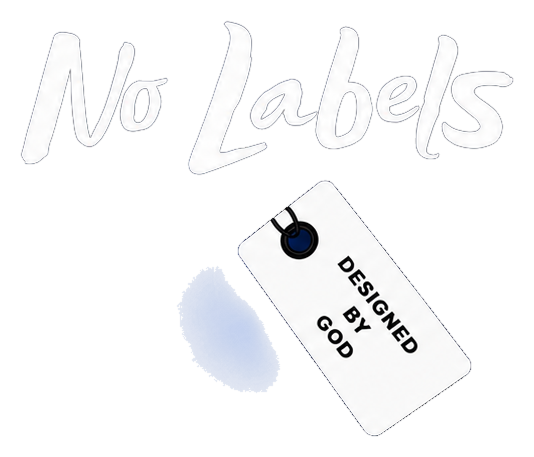
Big Question
Who am I when everyone seems to have an opinion about me?
School, family, friends, teams, church, social media, and your own inner voice can all hand you labels. Some may describe part of your life. None of them gets to tell the whole story.
Big Truth
Your identity is not built from popularity, appearance, performance, mistakes, relationships, abilities, or other people’s labels.
God knows you fully. Following Jesus means learning to see yourself through the truth of Scripture rather than letting every voice around you define you.
Open Your Bible
Read the passages before reaching for conclusions.
- Psalm 139:1–18 — Notice how often the writer describes God knowing, seeing, searching, and being present.
- Ephesians 1:3–14 — Look for what God does before the passage talks about anything we achieve. Watch for chosen, adopted, redeemed, forgiven, and sealed.
- Colossians 3:1–4 — Notice where the believer’s life is said to be found.
1
Labels can describe something without defining everything.
People use labels constantly: athlete, quiet, smart, awkward, popular, church kid, gamer, troublemaker, gifted, weird, leader, follower, rich, poor, anxious, funny, serious, successful, failure.
Some descriptions may be partly true. The problem begins when one description becomes the whole story.
A bad grade can describe one assignment. It cannot tell you your value. A mistake can describe something you did. It does not have the authority to become your permanent identity. A compliment can encourage you, but even a positive label can become unhealthy if you feel you must keep performing to deserve love.
2
God knows the whole person.
Psalm 139 does not describe a God who only sees the public version of you. God knows thoughts, habits, fears, strengths, motives, questions, and places where growth is needed.
Being fully known by God can feel uncomfortable because there is nothing to hide behind. It is also freeing. You do not have to build a fake version of yourself for God.
“This is where I am. This is what I am afraid of. This is where I need forgiveness. This is what I do not understand yet.”
3
Identity in Christ begins with grace.
Ephesians 1 focuses on what God has done. Christian identity is not, “I finally became impressive enough for God.” It is rooted in God’s grace, Christ’s work, and the believer’s belonging to Him.
That does not mean choices do not matter. They do. But obedience grows from grace. We do not obey to manufacture worth. We obey because Christ is Lord and because His grace changes how we live.
4
Belonging to Jesus reshapes every other label.
You may still be a student, sibling, musician, athlete, artist, employee, friend, or member of a particular community. Those roles can matter without becoming your master identity.
Colossians 3 teaches believers to set their minds on Christ because their life is hidden with Christ in God. Following Jesus means every other part of life gets placed under His leadership.
Think It Through
Which voice gets the final word?
Imagine you receive ten comments in one day. Nine are encouraging and one is cruel. Which one is easiest to replay in your mind?
Now imagine the opposite: someone praises you for something you are known for, but inside you feel terrified that one failure will make everyone stop respecting you.
Both situations show how easily we can hand other people too much authority over our identity.
The answer is not to stop caring what anyone thinks. Wise feedback matters. Correction matters. Community matters. The question is: Which voice gets the final word?
Talk About It
Questions for discussion.
- Which words or phrases stand out to you in Psalm 139?
- Why do labels become powerful during the preteen and teen years?
- Can a positive label become unhealthy? How?
- What is the difference between admitting a mistake and turning the mistake into your identity?
- What does Ephesians 1 say God has done for believers?
- How can belonging to Christ affect the way you respond to criticism?
- How can it affect the way you respond to praise?
You may answer generally or pass on a question. You do not have to share a private story to participate.
Preteen Track · roughly 11–14
Test the label.
Choose three labels people might use for someone your age. For each one, ask:
- Is this always true?
- Does this label tell the whole story?
- Could it change over time?
Then write one sentence from Scripture that is more foundational than the label, such as “God knows me,” “God made people in His image,” or “My life belongs to Christ.”
Teen Deeper Dive · roughly 14–18
Think about identity online.
Profiles often turn a whole person into a few pictures, achievements, opinions, aesthetics, or affiliations. Discuss what can happen when someone starts living for the version of themselves that receives the most approval.
Go deeper: What is the difference between healthy self-understanding and making the self the center of everything?
Try It This Week
Notice who is shaping the story.
For seven days, notice one moment each day when a label, comparison, compliment, criticism, or expectation starts shaping how you see yourself.
Pause and pray: “Jesus, help me receive what is true, reject what is false, and remember that You know me fully.”
If correction is deserved, respond humbly. If a label is false or exaggerated, do not let it become your identity.
Memory Verse
Colossians 3:3
Learn the verse from the Bible translation your family, church, or class uses. Pay attention to where your life is said to be found.
Prayer
Talk honestly to Jesus.
Jesus, You know me better than anyone else does. Help me stop building my identity from approval, comparison, fear, success, or failure. Teach me to receive correction without believing I am worthless, and receive encouragement without becoming proud.
Help me remember that my life belongs to You. Shape my character so that who I am in private matches who I claim to be in public. Amen.
Leader / Parent Note
Guide the conversation without taking it over.
Purpose: Help young people separate identity from performance without teaching that choices are unimportant. The biblical goal is neither shame nor self-centered affirmation. It is truthful identity under the lordship and grace of Christ.
No forced disclosure
Do not ask students to publicly name hurtful labels, bullying experiences, family conflict, body-image struggles, medical conditions, sexual experiences, abuse, or other sensitive information. They may speak generally or pass on any question.
Safeguarding
If a young person voluntarily shares a concern suggesting they or someone else may be unsafe, listen calmly, take the concern seriously, and follow your church or organization’s safeguarding procedures and applicable reporting requirements. Do not promise secrecy you cannot keep.
Conviction is not condemnation
Conviction identifies something that needs repentance and change. Condemnation says, “You are beyond hope.” The gospel calls people to repentance while pointing them to grace in Christ.
Suggested closing question
Which voice has been getting too much power in how you see yourself, and what truth from Scripture can help put that voice in its proper place?
This study does not ask young people to create an account or submit personal information, private stories, prayer requests, names, ages, schools, locations, photos, or contact details.